|
New 2011 edition |
|
|
Home | About the Author | Read foreword by Paula Radcliffe | Order book or download |
|
| Read free samples: Background & contents Chapter 9 (carcinogens) |
|||||||||||
| About the book: What's new in this edition Some facts in this book Readership |
|||||||||||
|
|
|||||||||||
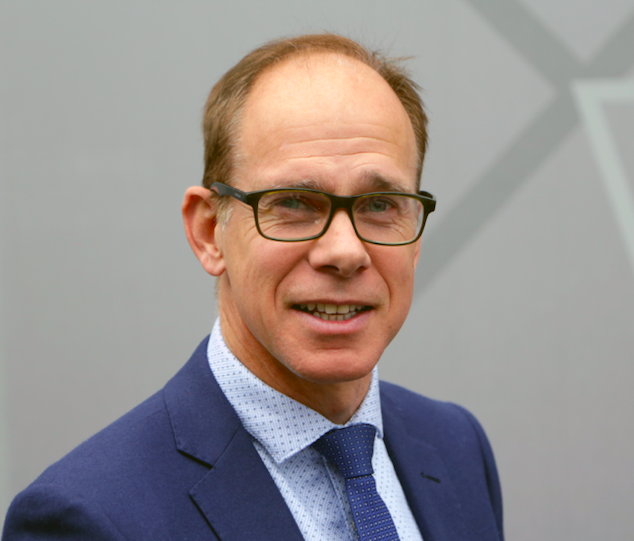
Author:
Professor Robert
Thomas
Foreword:
Paula Radcliffe
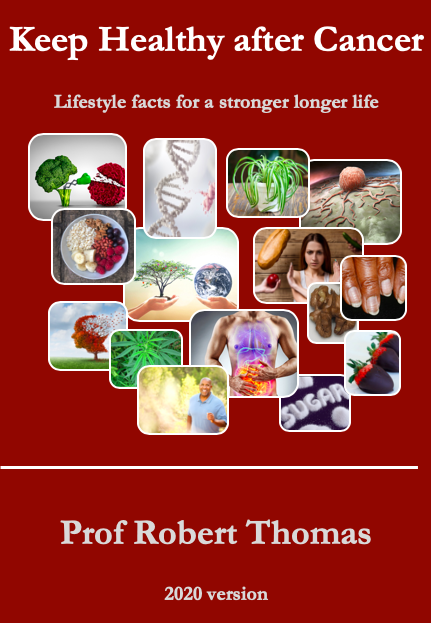
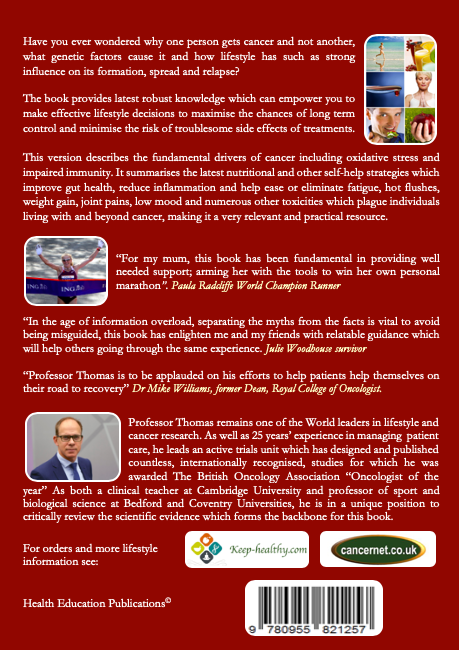
One of the most common and important questions asked by people following a diagnosis of cancer, is; “What can we do to help yourselves?” The answers are provided by this completely revised and updated book. This second, 2011, edition describes the high quality research from around the world which has demonstrated that diet, exercise and other lifestyle changes can; help avoid cancer especially if you have a family history or genetic risk; help you cope with treatments side effects; reduce the risks of complications of cancer treatments; slow the rate of progression of cancer and help prevent your cancer relapsing. What some of the 5000 readers of the sell out first edition have said:
"This book has been fundamental in providing well needed support, arming my mother with the tools to win her own personal marathon" Paula Radcliffe world Champion.
"This book stands out from the crowd - it sorts out the wheat from the Chaff. My lifestyle bible, it helped me to recover earlier with more confidence" Cecilia Nicholson journalist and survivor.
As we have a family history of breast cancer, this book has guided me to a lifestyle to reduce my own risks, explaining clearly why, how and what really matters in my daily routine" Liz Bray
The
author Professor Robert Thomas is one of the UK's leading experts in lifestyle,
information and quality of life research, voted both Hospital Doctor magazine Doctor of
the Year and the Pfizer, Oncologist of the Year. Since the first edition of the
book he has been commissioned to review the international evidence for lifestyle
and cancer for the Macmillan survivorship programme and now chairs their survivorship advisory committee.
He was the UK highest recruiter into the Diet after Breast cancer study (Diet-Complyf),
has published the world's largest prospective lifestyle study involving men with
prostate cancer and has designed and started three other major lifestyle after
cancer studies.
How to securely order your copy (ISBN: 978-0-9558212-1-9):
Option-1. Fully colour illustrated 290 page book; pay by credit card or paypal - Sent to any UK address (£8.95 + £1.90 pp) (The book will be posted within 2 days of order. If there is any delay or you are not satisfied with your order please contact us
Option-2. Electronic (pdf) download (£5.50 +0.40p) A pdf file will be sent via email within 3 days of payment (suitable for reading on computers or ipads )
Option-3. Amazon
kindle - click
here |
|
Foreword
by Paula Radcliffe
My mum, although
exceptional in many ways, is, I’m sure, similar to thousands of people
who have had the trauma of cancer thrust upon them. As well as wanting
to make sure she had the best possible medical care and fully understand
her treatment options, she had a strong desire to know the best ways to
help herself. Day to day
questions which seem straight forward before cancer now had an added
complexity especially after the side effects of surgery, radiotherapy,
chemotherapy and herceptin started creeping in. For example; What to
eat, what not to eat, should I exercise less or more, if so how and
where to exercise, would a supplement help, are they safe? Paula Radcliffe |
Who would benefit from this book
Those who want to life a healthy lifestyle to avoid cancer
Those who want to empower themselves after a diagnosis of cancer
Those who want to reduce their risk of their cancer relapsing after treatment
Those
who want to improve their overall chance of long term cure
Men who want to slow the growth of their indolent prostate cancer
Families and friends of those affected by cancer
Professionals interested in the evidence for lifestyle and cancer
What's new in this second edition
Like the successful first edition, this book aims to empower individuals with reliable information to ensure they can make the right lifestyle choices. The advice in the twenty chapters will ensure the best possible outcome after the trauma of cancer and its treatments - maximising the chances of living better and stronger for longer. This edition has been expanded to include information and advice on cancer prevention so, as well as being an ideal resource for those with a survivorship agenda it is now also highly relevant to anyone concerned about cancer in general.
As far as possible, the information and advice is based only on the facts or, in medical terms, reliable, high quality published research evidence from around the world. For this reason it dispels hearsay and urban myths but instead provides the reassurance and confidence that the efforts required to change an established and often comfortable lifestyle are worthwhile and likely to reap major benefits.
Since the first edition many more studies have been published in international medical journals as the importance of lifestyle is now beginning to be realised by health professionals and academic institutions. These have been included into this edition making it more up-to-date, topical and relevant to the stresses of modern day life.
New chapters have been added on quality of life, psychological well-being, complementary therapies and nutritional testing making it bigger, better and more focused on issues which affect people in all aspects of their daily lives, not just those which affect hospital treatments.
Many readers, including patients who have survived cancer, their friends and relatives, have also written with valuable feedback and useful tips. This feedback from individuals from a wide range of cultural backgrounds ranges from the best ways to exercise, how to communicate with relatives and friends, practical tips such as how to grind linseeds and what happens if you eat too many goji berries! This feedback has also been incorporated into this edition making it even more readable and applicable to individuals from all walks of life. Likewise, if you have any comments of what should be included, expanded or omitted from the next edition please feel free to contact us (health-education@clara.co.uk)
The structure of the book has been simplified to make it more enjoyable and easier to read. It is now split into three main parts:
The book begins by describing the background to cancer, what causes it, how it is inherited and how environmental and lifestyle factors aid or interfere with our body’s ability to fight it and stop it spreading.
It then breaks down the most important specific factors in our lifestyle which influence how we cope with the effects of the disease and treatments and how they influence its progression or relapse. It summarises the published literature from across the world, describing studies proving the benefits or risks of this or that particular element of lifestyle. It then describes how the chemical and physical elements of the individual lifestyle interact with cancer, or our bodily processes, to confer a benefit or cause harm.
Part two provides everyday lifestyle advice. - This is the real meat on the bones, providing easy to follow practical tips describing the activities of daily living we should do more of and what we should do less of to stop cancer progressing or relapsing and to improve the overall chance of cure.
Part three refers to the symptoms and effects commonly experienced after cancer either caused by the disease itself or the subsequent treatments. For ease of explanation it breaks down these symptoms into specific topics and describes practical tips to relieve them or minimise their effects on the body.
Examples
of the many facts you will find in this book:
Fact:
Most people in the west are Vitamin D and omega 3 deficient
Fact:
Excess grapefruit increases older women’s breast cancer risk.
Fact:
Zinc, if you have normal levels, increases your cancer risk.
Fact:
Bad fats after cancer increases the relapse risk.
Fact:
Good fats after cancer reduces the relapse risk.
Fact:
High cholesterol after prostate cancer increases the relapse risk
Fact: cod liver oil has too much vitamin A so fish oils are better
Fact: You can make you own superfoods
Fact: You can measure your micronutrient levels design your own optimal diet
Fact: There are two types of pelvic floor exercises
Fact:
Exercising for greater than 2.5 hours/week after cancer reduces the chance of
relapse
Fact:
Ordinary tea is as healthy as green tea!
Fact: Selenium
in Brazil nuts counterbalances the mercury in tuna fish
OTHER BOOKS BY THE AUTHOR
Cancer
Estilo de Vida (ISBN
9780955821226)
Este libro es una guía práctica sobre el estilo de vida especialmente pensado para individuos que tuvieron cáncer o están en tratamiento. De manera sencilla se presenta información veraz obtenida científicamente a través de investigaciones realizadas a nivel mundial, incorpora las experiencias de pacientes provenientes de distintas culturas y se enriquece con la participación de médicos especialistas, enfermeras, nutriólogos y expertos en oncología, estilo de vida y difusión de la ciencia. En este libro describimos la enorme influencia que usted, con la ayuda de sus amigos y familiares, puede tener en disminuir las posibilidades de desarrollar cáncer o, si usted ya lo tuvo, a vivir mejor y por más tiempo. Es una cuidadosa guía que le puede ayudar particularmente a:
reducir los riesgos y las complicaciones del cáncer
mejorar su calidad de vida y restaurar su confianza
frenar el crecimiento de algunos cánceres como el de la próstata
prevenir las recaídas del cáncer después de tratamiento inicial
mejorar en general la posibilidad de curación.
Electronic download
![]()
With emotions running
high any illness, including cancer, is not a good time to be
upset
further by destructive arguments. This practical little book has identified the
situations where arguments are most likely to happen. It contains simple
tips that are easy to read, understand and will help children and
adults to navigate around these argument trigger zones. The book was researched and written by an
editorial
team included adults and children from traditional, single parent and divorced
families from a wide range of cultural backgrounds making it relevant to all
types of families. Available as an electronic download £1.99 (+ 0.40p)
|
Links and further resources: |
What is cancer; About
specific cancers; Breast
| Prostate
| Bowel.
Cancer
treatments; Chemotherapy
| Radiotherapy |
Hormones | Biological
agents | Complementary.
Lifestyle
advice; Exercise |
Diet |
Smoking | Sunbathing
| Alcohol. Cope
with symptoms; Traveling
| Insurance | Making
a will | Support groups
| Tests for cancer | Clinical
trials. ...site
map |
An
excess or a deficiency of vitamins and trace mineral can lead to an
increased risk of cancer, other illnesses and troublesome symptoms. A
reliable way to ensure you have the correct amounts is to measure
them. You will then be a to make able to make informed dietary
decisions including and whether to take specific supplements
in order to restore your nutritional balance. ...read
more / order online |
The
first broad spectrum anti oxidant rich super food designed by a
leading oncologist. POmi-T
aims to boost your daily antioxidant
levels using only carefully selected natural wholes foods which have
been dried and concentrated for convenience ...read
more / order. |
Cracked
and sore lips are common during chemotherapy and afterwards. There is
evidence that natural oil based creams are better than petroleum based
creams. Nature-medical lip balm contains only
pure 100%
natural organic waxes and essential oils selected for their anti-inflammatory and
DNA stabilizing properties.. read
more..order |
|
Glossary | About us | Disclaimer | Contact us | How to advertise on this site |