





|
||||||||||||||
|
Vitamin D and cancer risk |
|
|||||||||||||
|
Measure your Vitamin D levels | Lifestyle after Cancer - the facts | Your essential micro-nutrients |
||||||||||||||
This page describes the evidence for the benefits of vitamin D testing and explains why adequate vitamin D levels are important for health, the risk of cancer. It provides information and links to a reliable online service to enable you to order an oncologist approved laboratory Vitamin D test. What is Vitamin D? How
do we acquire Vitamin D naturally?
We do not have enough Vitamin D How vitamin D influences the cancer
process? Excess Vitamin D Excess Vitamin D and Calcium
Supplement Clinical studies link inadequate Vitamin
D levels with cancer: [2] An observational study from Australia showed evaluated people surviving the skin cancer melanoma. Obviously, as the risk of this disease increases with sun-burning patients are told to keep out of the sun afterwards. However the study demonstrated that those patients who ignored this advice and continued to have regular sun exposure actually had a lower risk of the melanoma spreading to another part of the body. [3] An observational evaluation of men with jobs involving exposure to high levels of sunlight found that they were less likely to develop kidney cancer than those with little or no sunlight exposure at work. More specifically, the study appearing in the journal “Cancer” showed men with the highest level of work-related exposure to sunlight were 24 percent to 38 percent less likely to have kidney cancer than other men. [4] A reported in the Journal of Clinical Oncology evaluated 18 studies of over 10,000 people to show that people with the highest vitamin D blood levels had up to 33% lower risk of colon cancer, compared to those with the lowest. Researchers noted that vitamin D deficiency is a problem in industrialized nations, and as many as 58% of adults or adolescents in the US could be deficient in vitamin D. [5] The American Society of Breast Surgeons reported that breast cancer patients with low levels of vitamin D had more aggressive tumors and poorer outcomes. Researchers tracked 155 women who had surgery for breast cancer between January 2009 and September 2010." They found an association between low vitamin D levels (less than 32 milligrams per milliliter of blood) and poor scores on every major biological marker used to predict a breast cancer patient's outcome. [6] A Systematic Review of Prospective Studies published in the JCO (Ma et al 2011 29:3775-3782 ) evaluated nine studies which analysed Vitamin D intake and serum blood levels of 25-hydroxyvitamin D [25(OH)D] which covered 1,000,000 participants from several countries. The pooled RRs of colorectal cancer for the highest versus lowest categories of vitamin D intake and blood 25(OH)D levels were 0.88 (95% CI, 0.80 to 0.96) and 0.67 (95% CI, 0.54 to 0.80), respectively. There was no heterogeneity among studies of vitamin D intake (P = .19) or among studies of blood 25(OH)D levels (P = .96). A 10 ng/mL increment in blood 25(OH)D level conferred an RR of 0.74 (95% CI, 0.63 to 0.89). They concluded that Vitamin D intake and blood 25(OH)D levels were inversely associated with the risk of colorectal cancer.
[7] A word of warning - An analysis of data on 3,223 patients found those with the highest amounts of vitamin D from sun exposure had a 60 percent greater risk of developing the most common form of skin cancer (Basal cell Carcinoma) than those with lowest levels. This study tells us that too much sun, particularly burning will still increase the risk of skin cancers despite adequate vitamin D levels. [8] Increased risks for all-cause mortality and death from cancer and cardiovascular disease associated with low vitamin D levels registered a weak, non-significant trends in a large prospective study, according to a study in the American Journal of Clinical Nutrition. The analysis did reveal one near-significant association, however: Women with normal waist circumference, defined as 35 inches or less, and low [25-hydroxyvitamin D (25-OH-D)] levels were at nearly double the risk for all-cause mortality (HR 1.85, 95% CI 1.00 to 3.44), whereas those with larger waist measurements were not," leading researchers to suggest that body fat distribution may play an important role in the modulation of the effect of low vitamin D concentrations. Do vitamin D
supplements help lower cancer risk? [1] A reported of a study from Stanford University School of Medicine in the Journal of Clinical Oncology showed that taking a vitamin D and calcium supplement may help some women reduce their risk for developing melanoma. They analyzed medical data from roughly 36,000 women between the age 50 and 79, were randomized to either take both calcium (1,000 mg) and vitamin D3 (400 IUs) supplements or placebo, daily for seven years. The study team found that women who previously had non-melanoma skin cancer were 57% less likely to get melanoma, if they were in the calcium and vitamin D group.
[2] Not all studies point towards the benefits of vitamin D supplementation - A report published in the New England Journal of Medicine reviewed three clinical trials using doses of vitamin D that ranged from 400 IU to 1,100 IU per day all found that D didn't make a difference in terms of cancer risk. In fact, most of the evidence for cancer prevention lies in observational studies that simply compare vitamin D levels with the incidence of cancer in a study population. They concluded that, it was difficult to ascertain if people with high levels of vitamin D received some protection from it or if some other factor, such as their genetic inheritance or lifestyle factor, was at play.
As a result of this an article other studies, testing for vitamin D levels, once uncommon, has skyrocketed since medical studies linked deficiencies to a variety of diseases, including cancer according to a story in USA Today. The article notes that between 2006 and 2008, vitamin D testing increased by 74 percent and that manufacturers of vitamin D diagnostic tests have seen similar increases in demand. Article:
How to order an oncologist approved test
to measure your Vitamin D.
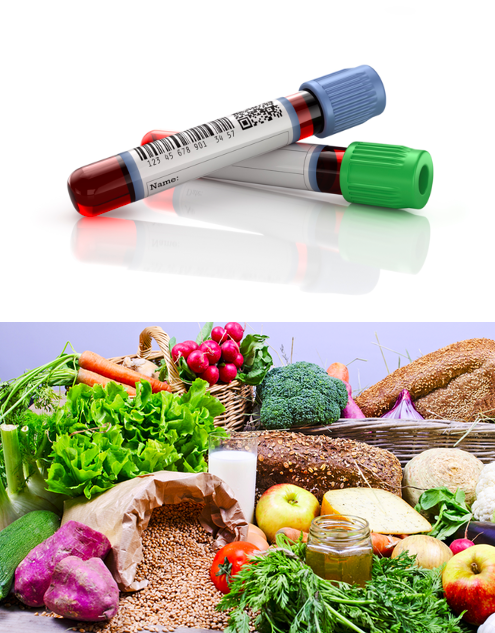
Step one; Click on the pay now link, below, to take you to the paypal site so you can securely pay with credit or debit card. You will receive a conformation email once payment has been accepted. Step Two; The laboratory will then send you a kit containing tubes for blood samples, packaging and an addressed envelope. (Please stop taking dietary supplements for at least 48 hours before the blood test) Step three; You then have to go to your local blood taking facility to take the blood sample (usually your GP's practice or a phlebotomy room in your local hospital - some phlebotomy centres may charge a small fee for this). After labeling the pots, immediately put them into the packaging and envelope provided and post as soon as possible. It would be best to do this earlier in the week so it doesn't reach the lab late on a Friday. You also have the option to visit the lab, in London, itself if you feel this would be easier (address will be enclosed in the literature). Step four (your report);
Professor Thomas will
review your individual results, write your report and provide specific dietary and
lifestyle advice relevant to your individual results. This may include
advising more of some types of foods, less of other foods or, if
necessary, taking specific supplements for a designated period of time. This
report aims to empower you with the knowledge to be able to optimise
your nutritional balance to give you the best change of preventing or fighting
cancer and other chronic diseases.
The vitamin D Profile This test will give you a
complete break down of your Vitamin D profile. It measures the three most common
analogues: |
||||||||||||||