




Cancer Risk Nutritional Profile

Home Lifestyle tips Treatments Symptoms Cancers

.
Contents & links: Why have this test | The Cancer Risk Nutritional profile | Your report | What happens when you order | Other nutritional tests; Hair mineral analysis | Red cell mineral analysis | Vitamin profile (levels and function) | Antioxidant stress levels (simple) | Antioxidant profile (full) | Lutein and lycopene | Co-enzyme Q10 levels | Your complete lifestyle and cancer guide

Why have this test?

A deficiency of vitamins and trace mineral can lead to an imbalance in the immunity and an increase risk of cancer and other major diseases.  On the other hand, evidence from well conducted  studies has also shown that an excess of vitamins or minerals can also increase the risks of cancer as well as heart attacks and other diseases. Furthermore, an optimal nutritional status will also help to fight common symptoms experienced after caner and its treatments including fatigue, arthritis, weight gain, anxiety and depression. Because most of us do not know our baseline nutritional status, taking an off the shelf nutritional supplements is likely to do more harm than good. 

The most reliable way to ensure you have the correct amounts of vital nutrients in your body is to measure them but these tests are not freely available on the NHS or indeed in most private hospitals. For these reasons Professor Robert Thomas designed this test, based on his own lifestyle research and the international published evidence which he has summarised in a series of editorial publications, his book "Lifestyle after cancer" and for the 2010 the Department of Health Survivorship programme. 

The Cancer Risk Nutritional Profile

This blood test measures the levels of nutrients in your body which, if not optimal, have been linked with an increased risk of cancer.  A measure of these nutrients will empower you with the knowledge to be able to modify your diet, or take specific supplements, which will give you the best possible chances of; fighting your cancer; dealing with side effects of treatment; reducing the risks of relapse. 
Please note; This is not a test for cancer and does not replace advice from your medical team.

What will happen when you order?

Step one 
Click on the pay now link, below, to take you to the paypal site so you can securely pay with credit or debit card.
You will receive a conformation email once payment has been accepted. 

Step Two
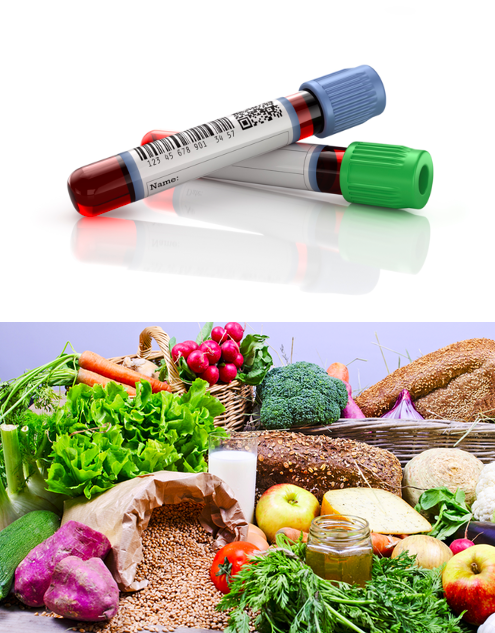
The laboratory will then send you a kit containing tubes for blood samples, packaging and an addressed envelope. 
(Please stop taking dietary supplements for at least 48 hours before the blood test)

Step three
You then have to go to your local blood taking facility to take the blood sample (usually your GP's practice or a phlebotomy room in your local hospital - some phlebotomy centres may charge a small fee for this). 
After labeling them, immediately put them into the packaging and envelope provided and post as soon as possible. It would be best to do this earlier in the week so it doesn't reach the lab late on a Friday. 
You also have the option to visit the lab, in London, itself if you feel this would be easier (address will be enclosed in the literature).

Step four (your report)
Professor Robert Thomas
, a leading UK cancer doctors with a special interest in lifestyle and nutritional research will review your individual results, write your report and provide specific dietary and lifestyle advice relevant to your individual results. This may include advising more of some types of foods, avoiding certain foods or, if necessary, taking specific supplements for a designated period of time. Your report will be split into the following evidence based categories to ensure you are empowered with the knowledge to help fight (or prevent) cancer:

(If there are any issues with your order please email us at health-education@clara.co.uk)


Further analysis (specific tests)

Individual test  Price
Mineral & trace - hair test £65
Mineral & trace element - Blood test £115
Vitamin profile (A, B, C, D, E) £189
Antioxidant activity £79
Antioxidant Profile £179
Lutein & lycopene £65
Co-enzyme Q10 £46

If there is an abnormality in your cancer risk profile, you may be advised to repeat that specific test after a designated period of nutritional advice +/- a period of specific supplement intake. To save money the individual tests have been listed and can be ordered separately below:


Mineral and trace element analysis

There are several ways to measure the bodies levels of minerals, trace elements in order to assess whether they are deficient or present in toxic levels. The two most relevant to cancer prevention and well-being are hair and red blood cell analysis. 

Hair mineral analysis   Unlike blood and urine, hair acts as a storage depot for elements so is thought to give a more accurate picture of deficiencies or toxicities over a period of time. The element concentrations in the hair reflect concentrations in other body tissues. This is a useful tool for screening mineral imbalances and toxicities.  Although deficiencies could be addressed by selective dietary supplements, excess levels should be confirmed with appropriate blood or urine tests.

Minerals measured: Ca, Mg, P, Na, K, Fe, Cu, Zn, Cr, Mn, Se, Ni, Co, Pb, Hg, Cd, As, Al

What you have to do: First simply pay online via this page (Paypal or credit card). You will be sent an email requesting (Your name, age, weight, height and some specific lifestyle questions). We will then send you a pot for your hair sample. About 25g of hair (1 heaping tablespoon), In the two weeks before the analysis use only a simple shampoo such as Johnson & Johnson®. Hair must not be dyed and should be cut from as near as the scalp as possible. You will be asked to return that back in the envelope provided.

The test results:  These will be emailed to you within three weeks along with dietary or supplement recommendations, from a consultant cancer physician, specifically related to your individual mineral profile.  (see example of a report)

Cost: £65 (If there are any issues with your order please email health-education@clara.co.uk)


Red blood cell mineral profile This is the most accurate method to asses the bodies pools of  minerals and trace elements, particularly if the hair mineral analysis has found an excess. it is also the most accurate method to assess the bodies selenium levels

Minerals measured: K, Mg, Ca, Zn, Cu, Se

What do you have to do: First simply pay online via this page (Paypal or credit card). You will be sent an email requesting (Your name, age, weight, height and some specific lifestyle questions). We will then send you a kit containing three tubes for blood samples (A trace element free blue EDTA tube and a gold topped SST tube and a green heparin tube), packaging and an addressed envelope. You then have to go to your local facility to take the blood sample (usually your GP's practice or a phlebotomy room in your local hospital - Some phlebotomy centres charge a small fee for this). After labeling them, immediately put them into the packaging and envelope provided and pop into the post as soon as possible. It would be best to do this earlier in the week so it doesn't reach the lab late on a Friday. Please do not take any dietary supplements for at least 24hours prior to the blood test.

The test results:  These will be emailed to you within three weeks. A consultant cancer physician will look at your test results and your questionnaire and if necessary recommend specific lifestyle or supplement advice depending on your individual profile.  (see example of a report)

Cost: £115 (If there are any issues with your order please email health-education@clara.co.uk)


Vitamin profile 

Levels of vitamins in the body can either be assessed by their levels in the blood stream or by their functional status (whether they are doing the job they should be). Functional measurement of  B vitamins is achieved by measuring the activation of a red cell enzyme that is dependent upon an adequate concentration of a particular vitamin for full activity. Functional assessment of vitamin status is useful to monitor the progress of vitamin supplementation, while absolute values are useful for checking absorption.

What is measured: Absolute blood levels Retinol (A), total carotenes, ascorbic acid (C), Tocopherol (E), lycopene and the  functional ability of thiamine (B1), riboflavin (B2) and pyridoxine (B6). Vitamin D (D3, D2 and 25-hydroxy vitamin D)

What do you have to do: Simply pay securely online via this page (Paypal or credit card). You will be sent an email requesting (Your name, age, weight, height and some other question about your lifestyle). We will then send you two tubes for blood samples (A gold topped SST tube and a green topped heparin tube). You then have to go to your local facility to take the blood sample (usually your GP's practice or a phlebotomy room in your local hospital- Some phlebotomy centres charge a small fee for this). After labeling them, please protect from the light, immediately put them into the packaging and envelope provided and pop into the post as soon as possible. It would be best to do this earlier in the week so it doesn't reach the lab late on a Friday. Please do not take any dietary supplements for at least 24hours prior to the blood test.

The test results:  These will be emailed to you within three weeks. A consultant cancer physician will look at your test results and your questionnaire and if necessary recommend specific lifestyle or supplement advice depending on your individual profile.  

Cost:£189 (If there are any issues with your order please email health-education@clara.co.uk)


Antioxidant stress profile

Antioxidants are thought of wield their anti-cancer properties by directly or indirectly counterbalancing the super oxide free radicals produce from carcinogens in our diet or other environmental factors.  It is difficult to know if you taking enough anti-oxidants to counterbalance the inevitable carcinogens in our environment. If you you are deficient in antioxidants you will be susceptible to oxidative stress states, including premature ageing, atherosclerosis, cancer, cataracts, macular degeneration, tooth and gum disease. 

Simple test (Serum baseline nutritional activity) The radical-scavenging antioxidants in human serum represent a heterogeneous group of substances, some synthesised in the body and some derived exclusively from the diet. This laboratory test, provides and estimate for total antioxidant activity 

What is measured: A total antioxidant activity figure compared to a  reference range of 1.32 – 1.58 mmol/L (Trolox equivalents). Also an adjusted figure for serum nutritional antioxidants (taken as the total serum activity minus that of the serum albumin and uric acid) compared to a reference range of 450 – 800 µmol/L (Trolox equivalents). 

What do you have to do: Simply securely pay online via this page (Paypal or credit card). You will be sent an email requesting (Your name, age, weight, height and some other question about your lifestyle). We will then send you a tube for a blood sample (One gold topped SST tube). You then have to go to your local facility to take the blood sample (usually your GP's practice or a phlebotomy room in your local hospital- Some phlebotomy centres charge a small fee for this). After labeling them, immediately put them into the packaging and envelope provided and pop into the post as soon as possible. It would be best to do this earlier in the week so it doesn't reach the lab late on a Friday. Please do not take any dietary supplements for at least 24hours prior to the blood test. (view test interpretation)

Cost £79 (If there are any issues with your order please email health-education@clara.co.uk)

Full test (Antioxidant profile)  This comprehensive test can detect nutritional deficiencies which can affect your ability to mop up toxic free radical before they have a chance to damage your cells. This group of enzymes includes:

  • Superoxide dismutase (which has three isoforms – copper/zinc, manganese and iron),
  • Catalase (a haem enzyme), 
  • Glutathione peroxidase (a selenoenzyme),
  • Paraoxonase (which is found in HDL),
  • Glutathione reductase (which regenerates GSH from oxidized glutathione inside the cell),
  • Glutathione-s-transferase (which detoxifies carbon-centred electrophilic agents, such as many drugs).

The profile comprises of serum and red cell copper, serum caeruloplasmin, serum vitamin E and betacarotene, red cell glutathione peroxidase and superoxide dismutase, red cell fragility and a measure of platelet aggregation. This gives a detailed picture of intracellular and extracellular copper status, selenium status and membrane-related antioxidant status. 

What is measured: Serum & Red blood cell Cu, ceruloplasmin, vitamin E, RBC GSH-Px, RBC fragility, superoxide dismutase and serum ß-carotene.

What do you have to do: Simply securely pay online via this page (Paypal or credit card). You will be sent an email requesting (Your name, age, weight, height and some other question about your lifestyle). We will then send you a two tube for a blood sample (One gold topped SST tube and a green topped heparin tube). You then have to go to your local facility to take the blood sample (usually your GP's practice or a phlebotomy room in your local hospital- Some phlebotomy centres charge a small fee for this). After labeling them, immediately put them into the packaging and envelope provided and pop into the post as soon as possible. It would be best to do this earlier in the week so it doesn't reach the lab late on a Friday. Please do not take any dietary supplements for at least 24hours prior to the blood test.

The test results:  These will be emailed to you within three weeks. Elevated red cell antioxidants will suggests an early response to oxidative stress, in which increased cellular demand induces synthesis of the enzyme. Reduced red cell antioxidant enzymes will suggests micronutrient deficiencies, either due to poor diet or a later consequence of oxidative stress. These deficiencies are of zinc and copper from the cytosol, or of manganese from the mitochondria. A consultant cancer physician will look at your test results and your questionnaire and if necessary recommend specific lifestyle or supplement advice depending on your individual profile.  

Cost £179 (If there are any issues with your order please email health-education@clara.co.uk)

Lutein and lycopene There is increasing evidence for the important role of lutein in visual function.  Age related macular degeneration (AMD) is the leading cause of loss of vision in aging in Western societies.  The Lutein Antioxidant Supplementation Trial of atrophic AMD has shown a 50% increase in macular pigment optical density in the treatment group with significant improvement in multiple measures of visual function. Lycopene is obtained mainly in the diet from tomato base products, an is a potent antioxidant.  Epidemiological and experimental studies have provided support for the protective role of raised serum levels of lycopene in reducing cancer risk, particularly prostate cancer.

What is measured: Serum lutein and serum lycopene

What do you have to do: Simply securely pay online via this page (Paypal or credit card). You will be sent an email requesting (Your name, age, weight, height and some other question about your lifestyle). We will then send you a tube for a blood sample (One gold topped SST tube). You then have to go to your local facility to take the blood sample (usually your GP's practice or a phlebotomy room in your local hospital- Some phlebotomy centres charge a small fee for this). After labeling them, immediately put them into the packaging and envelope provided and pop into the post as soon as possible. It would be best to do this earlier in the week so it doesn't reach the lab late on a Friday. Please do not take any lutein containing dietary supplements for at least 24hours prior to the blood test.

The test results:  These will be emailed to you within three weeks. A consultant cancer physician will look at your test results and your questionnaire and if necessary recommend specific lifestyle or supplement advice depending on your individual profile.  

Cost: £65 (If there are any issues with your order please email health-education@clara.co.uk)


Co-enzyme Q10 This is synthesised naturally in humans and is also found in foods, such as vegetables and fish.  It acts as a cofactor in the electron transfer pathway which produces energy (in the form of adenosine triphosphate - ATP) within the mitochondria of human cells.  The energy is used for muscle contraction and other vital functions.  It is also an antioxidant which may have a sparing effect on vitamins C and E in situations of oxidative stress. Diminished concentrations of coenzyme Q10 have been reported with increasing age, on statin medication and in various disorders including cardiovascular disease and cancers.

What is measured: Serum Co-enzyme Q10

What do you have to do: Simply securely pay online via this page (Paypal or credit card). You will be sent an email requesting (Your name, age, weight, height and some other question about your lifestyle). We will then send you a tube for a blood sample (One gold topped SST tube). You then have to go to your local facility to take the blood sample (usually your GP's practice or a phlebotomy room in your local hospital - Some phlebotomy centres charge a small fee for this). After labeling them, immediately put them into the packaging and envelope provided and pop into the post as soon as possible. It would be best to do this earlier in the week so it doesn't reach the lab late on a Friday. Please do not take any Q10 dietary supplements for at least 24hours prior to the blood test.

The test results:  These will be emailed to you within three weeks. A consultant cancer physician will look at your test results and your questionnaire and if necessary recommend specific lifestyle or supplement advice depending on your individual profile.  

Cost £46.00 (If there are any issues with your order please email health-education@clara.co.uk)


lifestyle cancer books diet exercise avoid relapse improve cureradiotherapy and chemotherapy cancer treatment filmFurther information The book Lifestyle After Cancer summarises the lifestyle evidence from around the world and provides practical advice for all stages in the cancer journey. Other links: Diet and cancer | Issues with supplements | Lifestyle and cancer | Lifestyle guidebook. A detailed film available in English, Italian, Urdu, Bengali, Gujarati & Hindi explains Radiotherapy & Chemotherapy. Cancernet.co.uk is a comprehensive cancer information resource written by an experienced team of doctors, health professionals and patients. It contains links and information on:  Specific cancers Breast | Prostate | Bowel.   Cancer treatmentsChemotherapy | Radiotherapy | Hormones | Biological agents | Complementary therapies .  Lifestyle and cancerExercise | Diet | Smoking | Sunbathing | Alcohol. Tips to help with symptoms and side effects. Financial issues: Traveling | Travel insurance| Links to support groups | Books | Tests for cancer | Clinical trials | What is cancer | How to avoid cancer | Glossary | About us | Disclaimer.