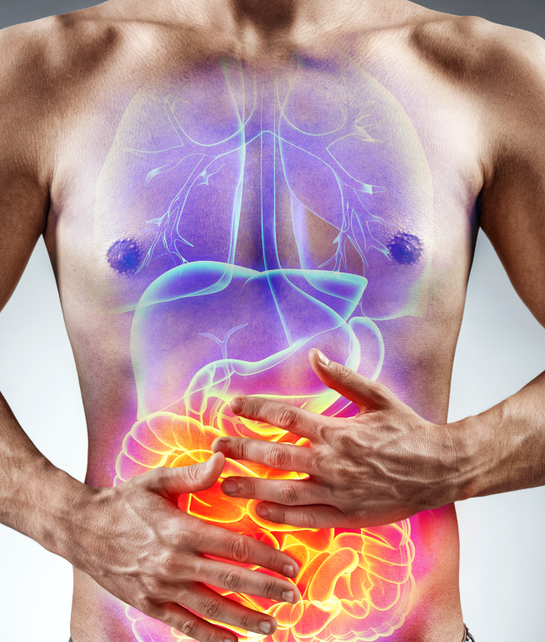





Early detection
is the key to reducing your risk of advanced prostate cancer and for diagnosis
of an early stage when there is a good chance for successful treatment. If you
are at an increased risk, talk to you doctor about when you should begin screening. For men at average risk,
these prostate cancer tests should be performed:
- Digital Rectal
Examination (DRE) - during a DRE, a doctor inserts a gloved and
lubricated finger into the rectum to feel for
any irregular or abnormally firm area that may indicate malignancy. If any abnormality is detected during the DRE, a
transrectal ultrasound will likely be recommended for a more detailed
diagnosis.
- Transrectal
Ultrasound (TRUS) - transrectal ultrasound uses sound waves released from a
small probe placed in the rectum to create an image of the prostate on a screen. It is often used in conjunction with a biopsy to help guide a needle
into the exact area of the prostate where a tissue sample will be taken for
examination under a microscope.
- Prostate-Specific
Antigen (PSA) - after the age of 50 an annual PSA blood examination is recommended.
Men at high risk may need to begin screening at an earlier age. The PSA
prostate cancer test
measures a protein that is produced by prostate cells. High PSA levels can
be a feature of this condition. But benign conditions and infections raise
the level of PSA as well.
In addition to standard PSA more detailed analysis is possible using free
versus bound comparisons and PSA doubling time (More details
on PSA) and transrectal ultrasound, the following may also be used
to establish the extent of the disease:
Further general information Your doctors
and specialist nurses are in an ideal position to give you relevant information
on your disease and treatment as they know your individual circumstances. Cancerbackup
has a help line (0808 800 1234) and a prize winning video
available in English, Italian, Urdu, Bengali,
Gujarati & Hindi explaining Radiotherapy & Chemotherapy. Cancernet.co.uk
has over 500 pages describing cancer, its management, practical tips and tool
which patients, their carers and their doctors have found helpful during the
cancer journey.
Home
| Cancer management
| Cancer treatments - Chemotherapy
¦ Radiotherapy ¦ Hormones ¦
Biologicals | Complementary
| Lifestyle - Exercise ¦
Diet ¦ Smoking ¦
Sun | Tests
for cancer | Books | Videos
| Travel | Insurance
| Symptoms | Side
effects | Clinical trials | Glossary
| Support groups & links | About
cancer | About us | Disclaimer