





|
||||||||||||||
|
Bowel adhesions - |
||||||||||||||
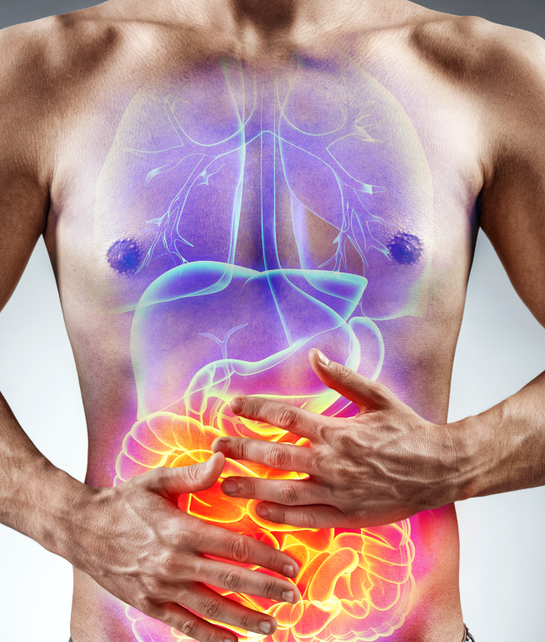
Surgery to the abdomen has a tendency to cause fibrous tissue to form between the loops of bowel. Normally these loops slide smoothly over each other, expanding and contracting easily as motion passes through them. Fortunately, in most cases, this fibrous tissue (or scarring) is not noticeable but in some it impairs the normal fluidity of the bowel causing kinks and partial blockages. These physical barriers to the regular flow of motion result in:
If
severe these episodes can lead to partial obstruction of the bowel requiring
hospitalisation sometimes on repeated occasions. This in itself is associated
with considerable disruption to patients daily lives especially, as is usually
the case, when an episode occurs just before a holiday or family event. In the
worse scenario bowels may obstruct altogether and require further surgery to cut
the adhesions (fibrous bands). This of course is a “double edge sword” as
although it relieves the immediate problem it adds to the underlying cause of
adhesions in the long term.
Further general information Your doctors and specialist nurses are in an ideal position to give you relevant information on your disease and treatment as they know your individual circumstances. Cancerbackup has a help line (0808 800 1234) and a prize winning video available in English, Italian, Urdu, Bengali, Gujarati & Hindi explaining Radiotherapy & Chemotherapy. Cancernet.co.uk has over 500 pages describing cancer, its management, practical tips and tool which patients, their carers and their doctors have found helpful during the cancer journey. |
||||||||||||||