






|
||||||||||||||
|
Making a will
|
||||||||||||||
Contents and links: Preparing your will | Government
advice | Wills in Scotland
| Living
wills | Make
a will online | Travel
insurance | Other financial
issues
| Lifestyle after Cancer - know the
facts
|
||||||||||||||
By making a will you can decide what happens to your property and possessions in the event of your death (for what ever reason). This will make it easier for your family and ensure you have the main say in their future Although you do not have to make one by law, it is the best way to make sure your estate is passed on to family and friends exactly as you wish. If you die without a will, your assets may be distributed according to the law rather than your wishes. A will sets out who is to benefit from your property and possessions (your estate) after your death. There are many good reasons to make a will:
Although it is possible to write a will by yourself, it is advisable to use a solicitor as there are various legal formalities you need to follow to make sure that your will is valid. You may also need legal advice for more complicated matters. A solicitor can also advise you about how Inheritance Tax affects you. A solicitor may be able to visit you in your own home, care home or hospital. The cost of writing up a will can vary between solicitors and will depend on how complicated your affairs may be and the experience of the solicitor. By far the most cost effective way to make a will is via reputable online solicitor such as Glosslegal As well as solicitors, voluntary organisations such as Citizens Advice Bureau and Age Concern can also help with your will. What should be included in your will? Before you write your will or consult a solicitor, it's a good idea to think about what you want included in your will. You should consider:
An executor is the person responsible with passing on your estate. You can appoint an executor by naming them in your will. The courts can also appoint other people to be responsible for doing this job. Where to keep your will safe Once you've made your will, it is important to keep it in a safe place and tell your executor, close friend or relative where it is. If a solicitor makes your will, they will normally keep the original and send you a copy. You can ask for the original if you wish to hold it. Keeping your will up-to-date You should review your will every five years and after any major change in your life - such as getting separated, married or divorced, having a child or moving house. Any change must be by 'codicil' (an addition, amendment or supplement to a will) or by making a new will. Making a will in Scotland Scottish law on inheritance differs from English law. If you live in Scotland and want to make a will, you can contact a solicitor or voluntary organisations such as Age Concern Scotland or Citizens Advice Bureau for advice. The Scottish Executive's 'Rights of succession' guide explains what happens if someone dies in Scotland without make a will. |
||||||||||||||


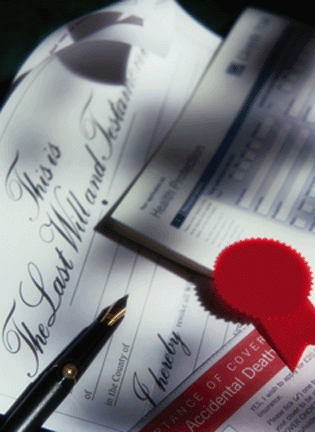 It
is a very good idea to make a will, even if you have perfect
health. Certainly after a diagnosis of cancer, individuals want to get their
"house in order" even if they have a good prognosis (good chance of
cure).
It
is a very good idea to make a will, even if you have perfect
health. Certainly after a diagnosis of cancer, individuals want to get their
"house in order" even if they have a good prognosis (good chance of
cure).